
Climate Change through the lens of Viktor Schauberger
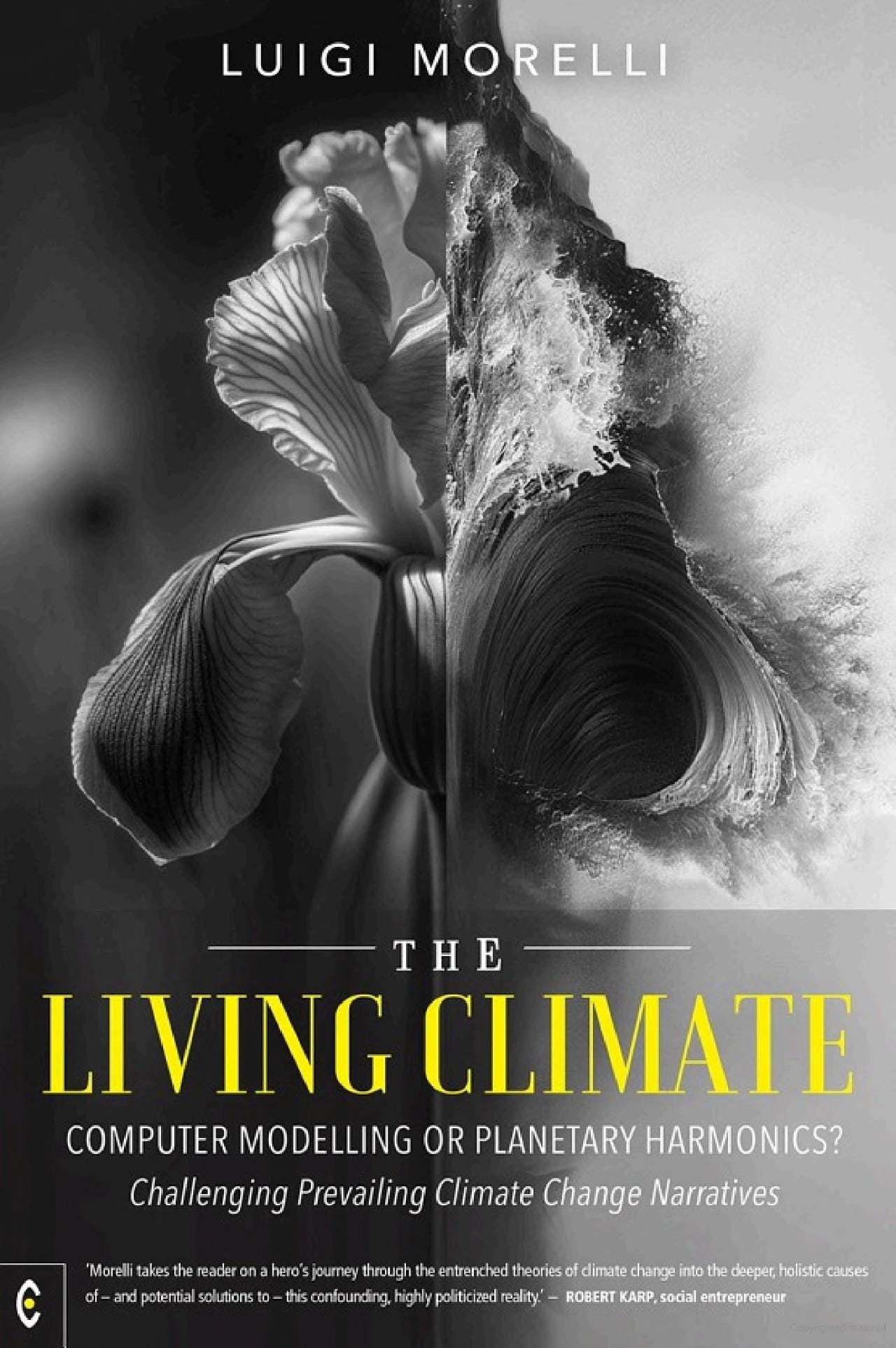
A review of THE LIVING CLIMATE: COMPUTER MODELLING OR PLANETARY HARMONICS? by Luigi Morelli, Clairview Books, 2024.

Luigi Morelli is a spiritual scientist and prolific writer whose 20+ works have focused primarily on social, historical and karmic questions, with a special emphasis on the occult forces and spiritual streams at work in the Americas. Luigi has a special ability to look out at the larger world and see, amid the chaos of our times, hopeful trends and signs of new, emergent human capacities.[i]
With this book, however, The Living Climate: Computer Modelling or Planetary Harmonics? Luigi has ventured into quite new territory, inviting the reader on a kind of hero’s journey through the entrenched theories of climate change into the deeper, holistic causes of—and potential solutions to—this confounding, highly politicized subject.
Let me begin by saying that I am deeply grateful to Luigi for writing this book. I suspect most of us with a background in spiritual science are aware that something truly immense is going on with the planet and its climate right now, something that goes well beyond the standard scientific theories to encompass the more subtle and invisible dimensions of the earth.
This awareness has perhaps protected some of us from succumbing to the usual politicized debates, fear mongering and hand wringing associated with the topic of climate change.
And yet, isn’t it also tragic how little the anthroposophical movement has had to say on this burning topic that is consuming so much of the interest of the rest of humanity? Where is our voice, our unique spiritual scientific research and perspective, we might ask?
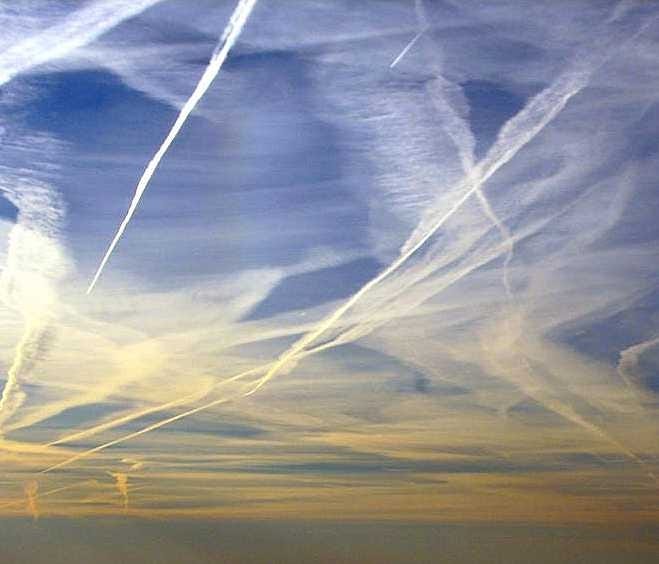
When climate change comes up in our circles, the best many of us can muster is to suggest a more sinister perspective—for example, that the climate change agenda is a fabrication that is being used to justify attacks on the etheric return of the Christ through various kinds of geo-engineering.
Others, more inclined to stay with the consensus narrative, point to the need to proliferate the number of biodynamic farms and perhaps develop a more holistic understanding of carbon cycles.
No offense to biodynamic practitioners or to those attempting a genuine discernment of dark forces in our midst, (there is certainly some truth to both of these perspectives), but is this really all we have to offer toward a deeper understanding and response to this world historic phenomenon?
So, let me say again what a huge sigh of relief I feel that Luigi has written this book. Is it the definitive spiritual-scientific exploration of climate change? I do not think so. But is it a HUGE step in the right direction? Most definitely it is, and I highly recommend it to anyone who wants to move beyond the more superficial theories and responses (whether scientific or spiritual scientific) into a deeper, truly holistic, perhaps one might even say, truly hopeful, understanding of climate change.
Readers like me who lack a scientific background, need to know that this is not an easy book to navigate. The abundant references to scientific studies and the complex scientific terms that fill many pages of the book, together with dozens of charts and graphs, present no small challenge in working through this book. A glossary of terms would be super helpful.
Because of these challenges, and because I think the book is well worth the effort, perhaps the most helpful thing I can offer a potential reader is simply a kind of road map for the journey, together with a few of the most salient insights, conclusions and questions I was left with from reading this book.
The book begins with a summary of conventional scientific data and theories about climate change. For this purpose, Luigi draws heavily on the book Unsettled: What Climate Science Tells Us, What it Doesn’t and Why it Matters by Steven Koonin. I found this overview quite helpful because it reveals so clearly the devotion and rigor that at least some members of the conventional scientific community are trying to bring to bear on the topic.
What becomes clear is that, at least at the level of the typical, honest scientist, we are not dealing with some kind of conspiracy to cook the data to give the appearance of something that doesn’t really exist. There appears to be, rather, considerable data to show that major changes are taking place in the earth’s climate and weather. Indeed, anyone with a sensitive relationship to nature and to the weather can easily arrive at such a conclusion.
The tragedy lies rather in the attempt to explain these diverse phenomena, and predict their future expression, within the framework, and with the methods of, materialistic science. Luigi does a great job of respecting the work of the scientistic community while also pointing to the enormous limitations associated with their fundamental premise of a closed, mechanical universe. In reading this section of the book, I was often reminded of the famous statement atrtributed to Abraham Maslow: If the only tool you have is a hammer, it is tempting to treat everything as if it were a nail.
Clearly, something incredibly important is speaking to us from the delicate mantle of forces circling the earth that we call weather and climate, but what methods will allow us to truly listen into and respond to this speaking?
The next, most voluminous chapters of the book, concern the life and work of Viktor Schauberger, who Luigi sees as the pioneer of the methods and insights that are necessary to both make sense of climate change and do something practical about it. For those not familiar with him, Viktor Schauberger was an Austrian inventor and naturalist whose life and work have taken on almost mythic proportions in some circles. He was a contemporary of Rudolf Steiner and Luigi claims they actually met on a number of occasions.

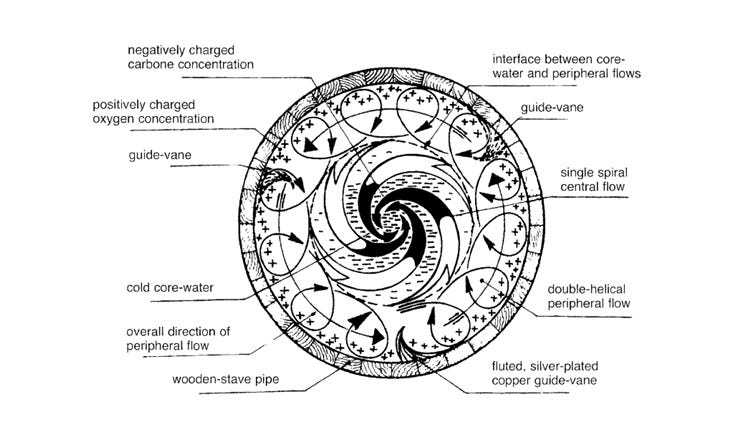
Schaubeger began his career as a forester, engineer and caretaker of large, pristine wooded estates. Gifted with considerable clairvoyance, Schauberger gained deep insight into the subtle forces working in nature, and went on to develop a host of innovative management strategies for rivers, forests and other natural areas, as well as a number of remarkable “implosion” or “vortex-based” devices for everything from tilling the soil, to purifying and revivifying water, to generating energy, heating and cooling from water.
While a number of books have been written about Schauberger and his mysterious life and destiny, Luigi is the first one, to my knowledge, to attempt to apply Schauberger’s insights in a rigorous way to the issue of climate change.
This section of the book is demanding because Schauberger, like Steiner, developed a whole new terminology to come to terms with the subtle aspects of nature. This terminology is both similar to, and quite different than, Steiner’s terminology. In spite of these challenges, a number of significant perspectives on climate emerge from this effort, most notably that perhaps the greatest sources of climate chaos lay in the disruption of the hydrologic cycles of the earth through the mismanagement of rivers, forests and agricultural lands that as we all know has been taking place on a grand scale across the planet for more than a century.
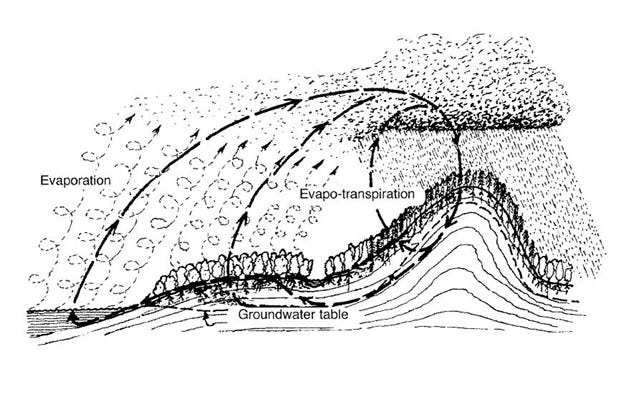
Essentially, what Schauberger, and Luigi, suggest is that the hydrologic cycle of the earth is a far more potent and nuanced force in the formation of the climate than modern science presently conceives. This is to put it mildly.
Water, you could say, is the great bridge between the earth and heavens. The health and vitality of this bridge, however, has been severely compromised, such that the “being of water,” if I can put it this way, can no longer serve as the great harmonizer or regulator of the climate and weather.
From this perspective, the real heart of transforming climate change lies not in improving carbon sequestration, but rather in the resotration of the hydrologic cycles of the Earth through the proper management of forests, rivers, and farmland. The trick here lies in the term “proper management” which from the point of view of Schauberger does not simply involve some kind of return to traditional practices but rather an advance toward management techniques based on a living understanding of the etheric, levitational, fluidic forces at work in nature.
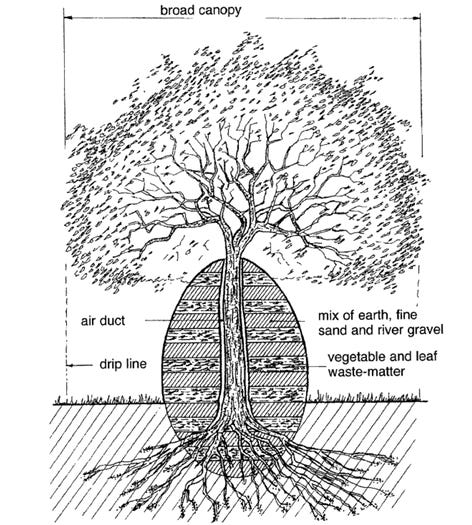
In other words, what would a biodynamic method of whole landscape management look like, one that also incorporated new forms of energy generation, toxin remediation, water flow management, waste recycling, etc. based on these levitational forces?
Unfortunately, some of the hopefulness of Luigi’s thesis begins to wane slightly when the question is posed this way. In order to turn the situation around, it appears we would need large groups of people on the planet with the necessary esoteric knowledge and practical skills—as well as access to the necessary land and resources—to properly scale up the kind of holistic landscape management described in this book.
Thankfully, Luigi does point to some promising examples of work along these lines in the Appendix to the book, but his thesis still begs the all-important question: how can this kind of work could be substantially accelerated in the coming years?
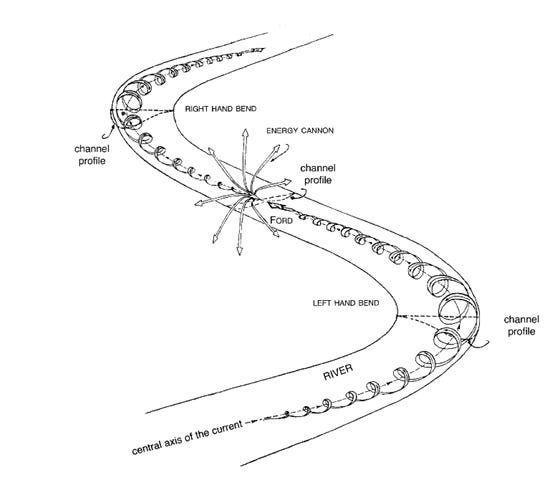
But this begs yet another question which unfortunately Luigi does not ask in this book but which my own work is much concerned with, namely: given the ongoing destruction and laming of the etheric forces of nature by modern technology and modern management practices, not to mention geo-engineering—and given the small number of biodynamic farms and other forms of enlightened landscape management presently on the planet—are there other ways to homeopathically stimulate the healthy breathing cycles of the earth, including the hydrologic cycle of water, by making use of, and amplifying, the power of the biodynamic preparations at special locations on the earth? (Stay tuned to my next Substack post wherein I will take up this topic.)
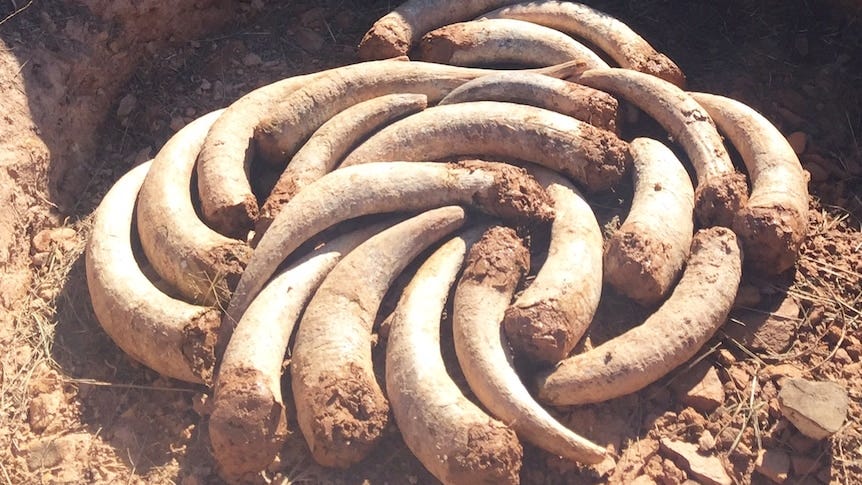
Whereas you could say the Schauberger chapters of the book look at climate from below to above—opening a window into the true ways in which human civilization is impacting the climate—the final chapters of the book are concerned with the impact of the wider cosmos on the earth’s climate.
These chapters draw heavily on the work of a number of remarkable activists and scientists, including Peter Taylor[ii] and others whose work points to the role of cloud cover, solar cycles, solar magnetic activity, solar wind, sun spots, geomagnetism, and a host of other periodicities and cosmic influences in shaping the climate.
Combining this research with the work of astrologers such as John Addey[iii] and Theodor Landscheidt,[iv] Luigi proposes that it may now be possible to predict major climatic cycles with a great deal of accuracy and perhaps even take appropriate corrective action to balance that which results from these diverse cosmic rhythms and influences.
As hopeful as it is to think that climate chaos might be caused as much by natural cosmic cycles as by human actions, the overall picture that emerges from this book remains that of an earth becoming less and less resilient, whether in the face of terrestrial and human influences, or in the face of these ever-changing cosmic influences.
At the close of the book, Luigi makes an admirable attempt to weave all these diverse threads together through the wisdom of spiritual science. Just as Rudolf Steiner pointed to the need to come to a new understanding of the heart in order to bring genuine healing to social life, Luigi points to the need for a new understanding of the sun, as the heart of our solar system, in order to bring healing to the ecology of our planet and to the practice of climate science. As Luigi puts it:
Whether we look at climate change from the Earth or from the solar system, there is an overlap at one critical place: the Sun, the heart of our life on Earth. Just as modern science thoroughly misunderstands the heart—treating it as a pump—so does it completely miss the basic ideas for coming close to a living apprehension of the heart our solar system. [v]
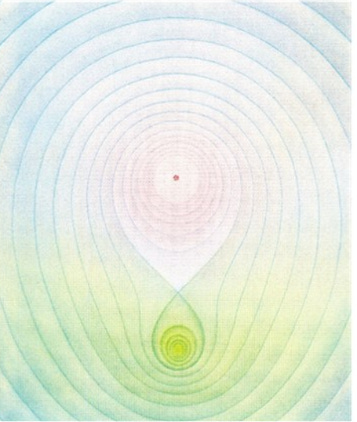
I found this point very resonant in the light of the fact that at one point Rudolf Steiner suggested that it is actually the “rights life” of one time period that creates the climate of a future time period.[vi] To my knowledge, no one has explored this surprising indication, but given that the rights realm is the middle or “sun realm” of the threefold social organism, it would seem that this indication is highly relevant to Luigi’s call for a new “sun wisdom” as a basis for addressing issues of climate change.
Perhaps this indication also offers a way to come down from the dizzying heights of the science Luigi presents in this book and back into the world of our daily lives. In other words, might our daily encounters with one another, with the natural world, and with the larger social organisms in which we live, if raised to a sacramental level, offer each of us an opportunity to create a healing medicine for the earth?
Is it possible, for example, that our humble spiritual deeds of love and service, day in and day out, reverberate into the cosmos, and work together with the deeds of others, to keep our planet alive in the face of the incredible attacks on her being at this time? And is it possible that simple methods such as goethean movement could significantly heighten the positive impact of these reverberations? This is another topic I will take up in future posts.
We might also ask to what degree climate change is connected with humanity’s crossing of the threshold, and the growing disequilibrium that we find in the thinking, feeling and willing of human beings as a result of this crossing (and as a result of the growing use of digital technologies)? Is not this disequilibrium also radiating out into the cosmos with every solar eclipse and then radiating back to us with every lunar eclipse to shape and disrupt the weather?[vii]
I also wonder about the overall aging of the earth as pointed to by Rudolf Steiner—to what degree is this aging contributing to the diminished resilience of the earth, and how can fresh, youthful, cosmic forces be brought to bear on the planet, for example through festival life, spiritual practices, the arts and, as mentioned above, through the use of the biodynamic preparations on both agricultural and non-agricultural lands?
And what precisely IS the role of geo-engineering and the like on these realities?
I share these questions in the hopes that Luigi and others will continue to write and work on this topic in order to bring ever deeper, ever more mature, ever more comprehensive and practical, spiritual scientific insights to bear on these urgent, burning, world changing realities.
[i] C.f. A Revolution of Hope: Spirituality, Cultural Renewal and Social Change and Spiritual Turning Points in North American History athttps://millenniumculmination.net/
[ii] C.f. Chill: A Reassessment of Global Warming Theory (2009)
[iii] C.f. Harmonics in Astrology (1975)
[iv] C.f. Sun-Earth-Man, A Mesh of Cosmic Oscillations (1989)
[v] Morelli, Luigi, The Living Climate: Computer Modelling or Planetary Harmonics? Page 234-235. Clairview Books, 2024.
[vi] Steiner, Rudolf, Spiritual Science as a Foundation for Social Forms, page 219. Anthroposophical Press, Hudson, New York, 1986.
[vii]C.f. Steiner, Rudolf, The Migrations of the Races — Sunlight and Moonlight, Solar and Lunar Eclipses and their Relation to Man’s Life of Soul.
No forest, no future. 🌲
Thanks for bringing this up. The book sounds worth a read.
It’s trees. They don’t just slow and manage the hydrologic cycle, they shade the soil in summer. The surge in summer heat is explained by the deforestation, the disequilibrium of the rain cycle is also explained by deforestation. To anyone who lives around trees this is painfully obvious. But most of the world’s people live in cities and therefore accept the corporate explanation for the change in the climate, an explanation which opens up new markets for profit and new means of social control.
Somehow, despite the corporate noise, trees must be planted, forests must expand and recover.